Showing posts with label beatrix potter. Show all posts

15.5.11

The Tale of Three Bad Parents

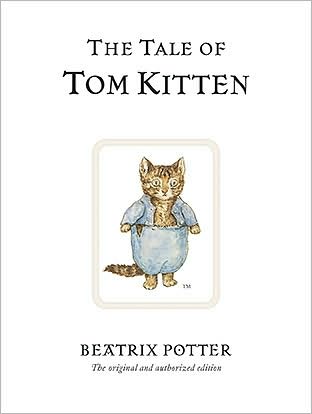
Part 8: The Tale of Tom Kitten:

True confession time: I always thought that the story of Tom Kitten was that he over ate and bursts out of his clothes.  (In all fairness, Tom Kitten is described as very fat but he's never portrayed as gluttonous or lazy.)

What its lazy is his mother who is more concerned about putting on a good tea when company comes 'round.  In preparation for said company, she gets her kids ready in their good clothes and leaves them to play outside unsupervised so she can get something to eat.

Kids being kids, they play and Tom Kitten, being dressed inappropriately by his mother, loses his clothes.

Then along comes the frankly, rather creepy, adult Puddle-Ducks who, instead of being helpful, tease the kittens, dress up in and then steal Tom Kitten's clothes, leaving him naked.  Weird.

So the kids go home and, naturally, their mother takes no responsibility in her poor choices (A common trait of abusive parenting) and punishes her kids instead of losing face in front of her friends and be able to keep up the appearance that they are a healthy, functioning family.  The kids act up again and the story ends in an unsatisfying way with the promise of more books about the antics of the kittens.

The interesting thing about this book is the coda at the end where the creepy Puddle-Ducks lose the stolen clothes in the pond and Beatrix Potter attempts a little mythology creation, explaining that the Puddle-Ducks are still looking for them and that's why ducks bob their head under water.

Part 9: The Tale of Jemima Puddle-Duck
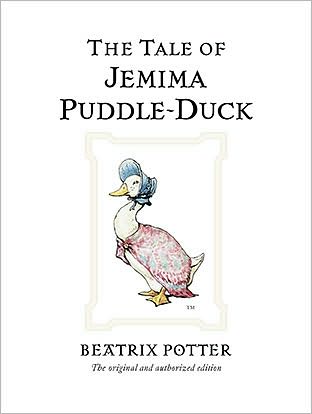
Jemima Puddle-Duck is quite possible the most clueless and unlikeable 'hero' that I've ever encountered in a book.  Her outright stupidity is jaw dropping when you consider her dedication to bring and presumably raise a bunch of children all on her own.

So basically, Jemima really wants to have kids but she's got nowhere to lay her eggs.  One day she comes across fox who is a moustache-twirling caricature of a villain.  Jemima not only fails to grasp that this is a villain she is interacting with, she fails to grasp the he's not just a fox but an animal, assuming instead that he's a friendly gentleman.

With the 'gentleman's' help, Jemima is shown a great place to build her nest: In a shed filled with feathers.  This would be like being pregnant and invited over to someones house for a meal and discovering that their dining room is decorated with human hair and skin.  Jemima thinks it's a great place to lay her eggs.

So she lays them and the 'gentleman' suggests that she should bring some ingredients to make a large feast before the dull process of incubating the eggs begins.  He suggests he will make her a tasty omelet if she gathers the correct ingredients for it.  So just to contextualize this: You're pregnant and sitting in the strangers dining room which is decorated with hair and skin and he tells you he's going to serve up fetus stew.  If you were Jemima Puddle-Duck you'd say "Yum yum!  I'll help you cook it."

(In all fairness page thirty-nine contains what must be one of literature's most understated sentences: "Jemima Puddle-Duck was a simpleton.")

During the process of gathering the ingredients, she mentions to a dog what's going on and he, possessing the keen intelligence of a dog, realizes something's up and gathers some buddies.

As the action comes to a head, the fox gets nasty and impatient towards Jemima and, while she checks in on her eggs, the dog posse shows up, chases off the fox and, in an orgy of bloodlust, eats all of Jemima's eggs.

Jemima's escorted back to the farm where she has learned nothing, lays more and only four of the chicks survive.  And they all live happily ever after.

Part 10: The Tale of the Flopsy Bunnies


Benjamin Bunny is all grown up, married his cousin and has had so many children that they are devoid of individual personalities and the couple has to sponge off the work and generosity of their family members in order to get by.

When they're not able to mooch off Peter Rabbit (Who appears to have gotten over his PTSD, become a farmer and married a fat little thing in a pink frock), Benjamin bunny takes his family out to the dump to eat garbage.  Specifically, fermented cabbage which, apparently, has 'soporific' effects.

So after he takes his family out and they all get high after eating garbage, they all pass out and/or laze about in a drugged out stupor.  Benjamin puts a paper bag on his head and has a chat with a mouse, not noticing that the farmer has come along, found his children and popped them in a burlap sack with the intention of skinning them and cutting off their heads and turning them into food and clothes.

Luckily his cousin-wife has not taken part in the orgy of drug-taking and comes along, realizes something is wrong and with the help of the mouse, saves her children, replacing them in the sack with vegetables.

They follow the farmer, who seems rather inbred himself,  to his home where they hear about what his intentions were with the bunnies and their skins.  Then for no reason the youngest bunny is badly hurt by a flying gourd and they go home without learning any lessons.

The helpful mouse is rewarded that Christmas with some rabbit fur outfits.  So I suppose the littlest bunny ended up expiring from his injuries and his parents were thoughtful enough to turn their dead baby into clothes.  The end.

8.3.11

The Clothes Make the Manimal

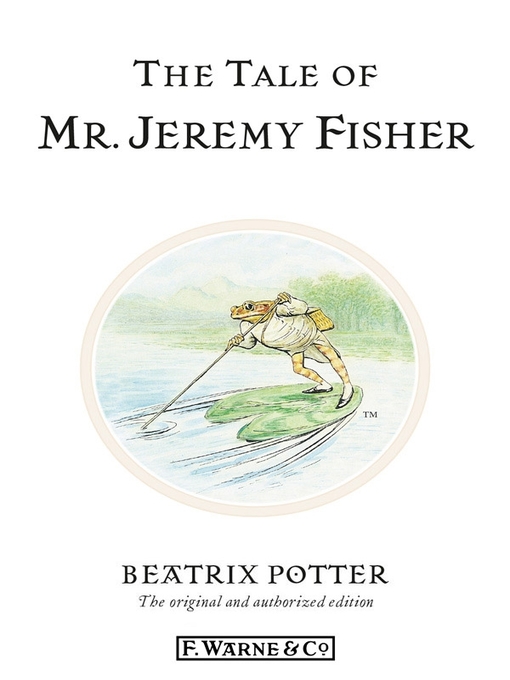
Part 7: The Tale of Mr. Jeremy Fisher

It has taken me long enough but I've just realized what an important role clothing plays in these books.  There's a lot of attention paid to exactly what each animal is wearing to the point of numerous redundancies and non-sequitors.  It has been established thus far that clothes equal personhood and should one of the animals lose their clothes (As seems to happen quite a lot.), they become animal and prey to the dangers of the world.

The animalistic predators are aware of this in Ms. Potters world and seem determined to first disrobe their prey and then eat them.  I now invite all sorts of perverse interpretations of this, considering especially that the victims are young innocents.

Luckily, however, we don't have to go there today as Mr. Jeremy Fisher is your eccentric uncle who lives in the countryside and smells of damp potatoes, has a tendency to drink too much whisky and fires his shotgun at things that irritate him like Mrs. Hiffle's Pomeranian.

Mr. Jeremy Fisher decides to catch some fish as he's having some friends over for dinner, including Sir Isaac Newton (Who just happens to be... a newt!  Comedy thy name in Beatrix.).  As always, things don't go according to plan as Mr. Jeremy Fisher deals with increasingly dangerous situations.

Luckily for him, he's wearing clothes.  Early on a fish tried to nibble a hole in one of his rubbers, a clear indication that the predators lurking behind every bullrush want this old coot naked for their sinister machinations.  When he manages to evade all the attempts to disrobe him, a pike gets fed up and swallows him whole.  Well, not quite.  Thanks to the bad taste of Mr. Jeremy Fisher's mackintosh, he gets spit out and is able to make it home in one pice (Though his clothes slightly less so) to meet his guests for an unsatisfactory dinner.

Like Peter Rabbit before him, clothing has saved Mr. Jeremy Fisher's life from what would have otherwise been a blip in the ecological web that we call life and he is able to go home and be a bad host.

6.3.11

I Dream of Tiggy-Winkle

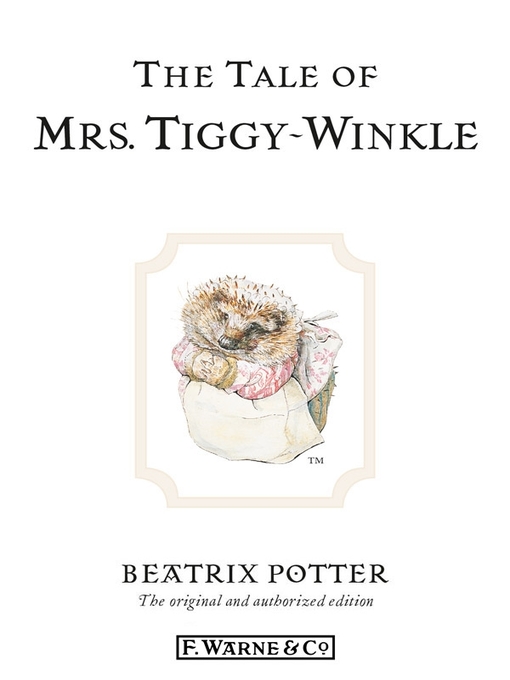
Part 6: The Tale of Mrs. Tiggy-Winkle.

Say it ain't so, are the Tales winning me over?  Yes and no.  This one was fairly straight forward.  A little girl loses her  handkerchiefs and embarks on a magical quest to find them.  A little bland by today's standards.  Bland by early twentieth century standards too, I imagine.  Throughout the story Lucie is fairly non-plussed about losing them.  After embarking upon a non-journey to find them, she discovers Mammy I mean Mrs. Tiggy-Winkle living in the side of a hill making her living as a maid to all the other animals.

I've noticed that the books are steadily becoming easier to read.  I'm not sure if it's because I've learned the voice to read them in or that Ms. Potter is becoming a more adept writer.  I suspect the latter because there is much less chaff attached to the stories.  The Tale of Mrs. Tiggy-Winkle does have quite a bit of chaff - do we really need page after page of various animals dirty laundry?  But it works - Yes we do need it because it continues the tales of Peter Rabbit and Benjamin Bunny (Shrunken jacket; oniony handkerchief) and makes mention of various other named animals whose names I've noticed have tales attached to them.  It's here I can see Ms. Potter's mythology is starting to take root.

The end however, leaves something to be desired.  As a twist ending (Spoiler: It was all a dream!) it's kind of played out.  It would have been much more interesting if, in fact there really was a four foot tall hedgehog dry cleaner in the side of a hill which, ironically (Double spoiler: It wasn't a dream!) there is.  See?  There's just something not working there.  Why does Mrs. Tiggy-Winkle get to be a giant animal who wears clothes and talks to humans when all the other animals are fairly straight forward and animal-like.  Granted they're anthropomorphized, but when they come into contact with humans all of a sudden they're just animals.  It doesn't make any sense that Mrs. Tiggy-Winkle exists outside that rule.

Otherwise this was a light and fairly harmless tale.  Except for the racism.

3.3.11

More Beatrix Potting

Part 5: The Tale of Two Bad Mice.

I really liked this tale.  I liked that Beatrix Potter created a story about a real child's dollhouse and her own pet mice.  I liked how they interacted, I liked the imagination.  I loved reading aloud the name Hunca Munca to little Henry.

But what I liked best was the murder at least one of the children of the mice.  The murders are subtle but they're there.  After the mice have vandalized the doll house and taken as much as they could back to their home, the little girl who owns it wanted her parents to buy a policemen doll to protect it.  Instead the parents buy a mouse trap.  And there, bright as day, the accompanying image shows Tom Thumb and Hunca Munca with their four children staring ominously and the wooden box.

Immediately the story switches to the mice engaging in indentured servitude to the doll house and the dolls therein.  The question is, what has caused the sudden shift?  Just the threat of death or something more sinister?  Were this to have been the first and only book written by Beatrix Potter, I would have assumed the threat of death alone would have cowed the little rodents into subservience.  However, based on her established record of placing young animal children in harms way, it's not unlikely that at least one of Tom Thumb and Hunca Munca's children would have paid the Ultimate Price (Which is not $19.99 in four easy payments) for the crimes of their parents.

Bad mice, indeed.

(For those who care, there a big ol' Wikipedia entry about the book.  Naturally, in order to keep by beautiful brain free from the influence of so called web scholars, I've not bothered to read it.)

Next Time: Something that's not Beatrix Potter-related.  I don't like committing so strongly to a theme.

1.3.11

Peter Rabbit 2: Electric Boogaloo

Part 4: The Tale of Benjamin Bunny.

The Tale of Benjamin Bunny picks up right after The Tale of Peter Rabbit.  In it, Peter Rabbit's cousin, the titular Benjamin Bunny, arrives at the Rabbit's sandy hole and we discover something very unpleasant about Ms. Rabbit, Peter's mom: She's a dealer in contraband.

You see, it was established in Peter Rabbit that the father was long dead - caught by the farmer and turned into food - and as such, Ms. Rabbit has had to find different ways to earn money, selling hats and little parcels of rabbit tobacco which Ms. Potter immediately back peddles on, saying that at rabbit tobacco is really lavender.  Ri-i-i-i-ght.

One is led to wonder just how potent this 'lavender' really is, since life seems to be quite normal at the Rabbit's, however Peter is still a gibbering mess: naked, wrapped in a pink handkerchief, and cowering out back while life goes on all tickety-boo for Flopsy, Mopsy and Cotton-tail those bitches.

So Benjamin, it turns out, is quite brave (And not just because he wears clogs!) and takes pity on Peter and recommending they get his clothes back, thus restoring his dignity and, one would hope, a place in his home.  As luck would have it, the farmer had gone out for the day and the two rabbits get Peter's  clothes and Benjamin builds his cousin's confidence back up by encouraging him to eat as he now timidly wanders around, a shell of a living creature.

And, since this is Beatrix Potter, we need something to happen to scar the protagonists so up pops the farmers cat (Once again, cat = evil) and chases them.  They hide under a basket which the cat then sits on for five hours causing the rabbits such emotional turmoil that Ms. Potter states explicitly in the text that she can't draw what went on in the darkness of that basket.

As luck would have it, Benjamin Bunny's father (Also named Benjamin Bunny.  The imagination on display when it comes to names is just earth shattering.) shows up - and this, I think, is key - smoking rabbit tobacco and in a bizarre display of violence that would make Charlie Sheen proud, attacks the cat, beats up the cat and then beats his son and nephew and sends them home where Peter is reintegrated back into the family thanks to getting his clothes back and will no longer have to starve to death in the Rabbit family's back yard.

Also, I think there should be a rule that all children's stories should end with a drug crazed family member coming out of nowhere and beating the shit out of everybody.  It would make Goodbye Moon so much more interesting.

The Tail. Or, of Gloucester

Part 3: The Tailor of Gloucester.

While reading this, the third book in Ms. Potter's magnum opus, I couldn't help but be reminded of its shocking similarity two two other great works of art:  Halloween 3: Season of the Witch and A Clockwork Orange.

Like Halloween 3: Season of the Witch, The Tailor of Gloucester takes a series of precedents established in the first two stories and then goes in a completely different direction for the third outing.  In this case, it is a sudden shift from child-like animals living in the woods being traumatized by the realities of the world to the story of a tailor in Gloucester (You've got to hand it to Ms. Potter how she cleverly links the titles of her books to their content) who is tormented to the point of poverty, illness and insanity by the pettiness of his cat because he ruined its meal (Quite a realistic plot, if you ask me.  No sarcasm intended.  Everyone knows cats are evil.).  Whereas in the Halloween series it is a shift from an indestructible William Shatner mask wearing serial killer hunting babysitters to androids harnessing the power of Stonehenge into Halloween masks that will kill children (Also a surprisingly plausible plot, if you ask me.)

Like A Clockwork Orange, Ms. Potter for some reason decided to write The Tailor of Gloucester in a fictional language, not too dissimilar to Nadsat with odd words and terms like 'paduasoy,' 'green worsted chenille,' 'ribbons for mobs' and frequent references to 'tippets.'

So the moral of this story - After freeing a bunch of mice his cat had trapped, the tailor's cat tortures him which means that the tailor won't be able to sew a coat for the soon to be wed mayor of Gloucester.  As such, the freed rodents work together to sew the coat while the tailor is being tortured.  The cat only stops when he realizes that he's not going to get fed.  The tailor is happy to discover that a bunch of house mice are as good or better tailors than he is, puts on the finishing touches on the coat and becomes rich and famous.  His cat doesn't learn any lesson and the tailor employs the mice in his shop in a weird sort of indentured servitude to sew the finishing touches on his coats - is, ah...  That the moral of the story is, um... that cats are evil?

I suspect the true moral, much like the true moral of Halloween 3: Season of the Witch, is to go back to what works in part four.  Which she did.

24.2.11

Beatrix Potting

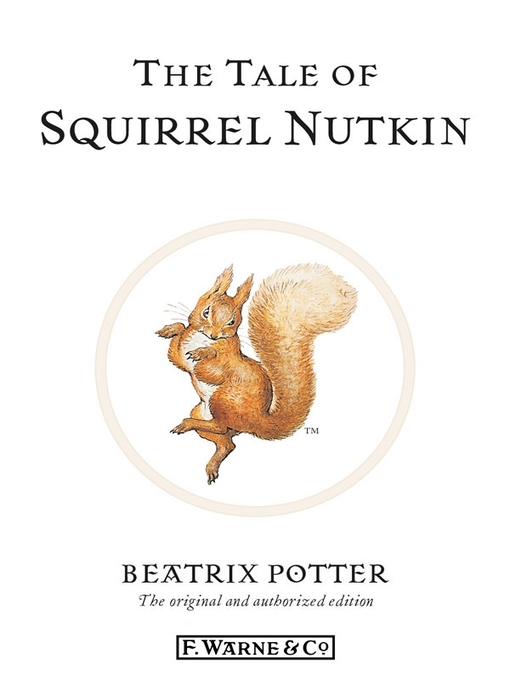
Part 2: The Tale of Squirrel Nutkin.

In essence, the is a respect-your-elders-or-face-the-consequences morality story.  In a nutshell (Get it?  Nudge, nudge.), while all the other squirrels are working hard collecting nuts and paying respect to the old owl who guards said nuts, Squirrel Nutkin is acting childish, avoiding work, telling nonsensical rhymes, playing games and generally disrespecting the owl.  This goes on until the owl has enough and decides to eat him instead of one of the offerings.

But, the tale does not end there, Beatrix Potter interjects.  It has a happy ending:  Squirrel Nutkin escapes from the owl by snapping his tale in half and being scarred for life, no longer able to speak, instead talking in broken, stuttering sounds.

Like Peter Rabbit, this is a story about an anthropomorphized animal child coming face to face with the reality of the world and embracing the natural timidity of their species.  But whereas Peter Rabbit involved nudity to achieve this end, Squirrel Nutkin ups the ante by incorporating dismemberment and post-traumatic stress.  Thus far it appears that in the world of Beatrix Potter, children are stupid, irritating things constantly on the verge of annihilation and adults are scarred husks, beaten (practically literally!) into conformity.

19.2.11

Book Review

Elisabeth picked up the complete hard cover collection of Beatrix Potter (minus two books) from our local charity shop for a grand total of thirteen bucks.  The missing volumes are winging their way over to us via Amazon.  What follows is part 1 of a 23 part series in which I review in order (And, I imagine, become increasingly dismissive of) her works.

I don't know if I've even read any of the books in their entirety before.  Mom says that I didn't like them but concedes that she was the one who didn't like them and most likely never bothered reading them to me.

Part 1: The Tale of Peter Rabbit.

It probably does the book a disservice by reading it at 4:30 in the morning after only three hours of sleep to a five month old whom you desperately want to go back to sleep but has the Let's Play look in his eyes after you've spent ten minutes changing his diaper because you're half asleep and somehow the diaper keeps getting put on backwards no matter how you turn it around.  As such, the book felt quite long.

This is a vague memory I have of Beatrix Potter's books and I'm interested to see how this stacks up to reality.

What I liked the most about this book was how Peter Rabbit's arc is from anthropomorphized young boy/ rabbit to, literally, a real rabbit.  As he loses his shoes, he goes from biped to quadruped and once he has lost his coat, he is no longer a little boy looking for adventure but a nervous rabbit facing the very real and deadly dangers of the world (As exemplified by Peter's father being caught, killed and baked into a pie earlier in the story).

So I suppose then, The Tale of Peter Rabbit is about the loss of innocence.  While his siblings are good kids and do as their told, they keep their clothes and humanity while Peter ends up sick, scared and a grown up rabbit scared of the world, aware of its dangers and to possibility of being turned into someone else's dinner.

It's also interesting to note that, according to this story, having camomile tea before bed is a bad thing yet I do this several night a week and find it quite pleasant.  Oh dear, it looks like I've lost my innocence.